Everything about IPG LightWELD handheld laser welding and cleaning — how it works, what it's used for, and what you need to know before switching from MIG or TIG. For model specs and pricing, see our product range.
One handheld system, deployed across fabrication, structural, and precision work throughout Australia and New Zealand.
General fabrication shops running mixed jobs across steel, aluminium and stainless.
Panel and chassis repair — minimal distortion, clean low-heat welds.
Structural steel and aluminium fabrication for load-bearing work.
Pipe-to-flange and process piping — clean seams, minimal finishing.
Precision welding on titanium and nickel alloys with low heat input.
Field repair and heavy fabrication for demanding specifications.
Maintenance and field repair for equipment that can't wait for shop scheduling.
Stainless steel equipment — clean welds, passivated in the same process.
Aluminium and stainless fabrication for marine-grade fit and finish.
Precision equipment fabrication where weld consistency is critical.
Mixed-material repair and fabrication across agricultural and appliance work.
Thin-gauge, decorative, and one-off precision work.
Switching materials takes seconds — no polarity changes, no electrode swaps. Select your preset and weld.
Up to 8mm on 2000 XR. Deep penetration — ideal for structural and fabrication work.
Up to 8mm. Integrated cleaning passivates welds quickly — no chemicals needed.
Virtually eliminates distortion. 5052, 6061, 6063, 7075, and 1xxx–3xxx alloys.
Up to 3mm on 2000 XR. Ideal where TIG and MIG struggle with heat management.
Up to 7mm. Precision welding with minimal heat input — aerospace-grade results.
Laser brazing skips zinc removal — dramatically reducing hazardous fume generation.
Up to 7mm. High-temperature alloys welded with precision and repeatability.
Weld different metals and thicknesses together — a task conventional welding struggles with.
Every LightWELD system ships complete with professional accessories. Here's what sets it apart from day one.
The beam oscillates up to 5mm wide — creating wider weld beads, bridging gaps in poor fit-up, and producing a more forgiving process for less experienced operators. Adjustable frequency and amplitude via the control panel.
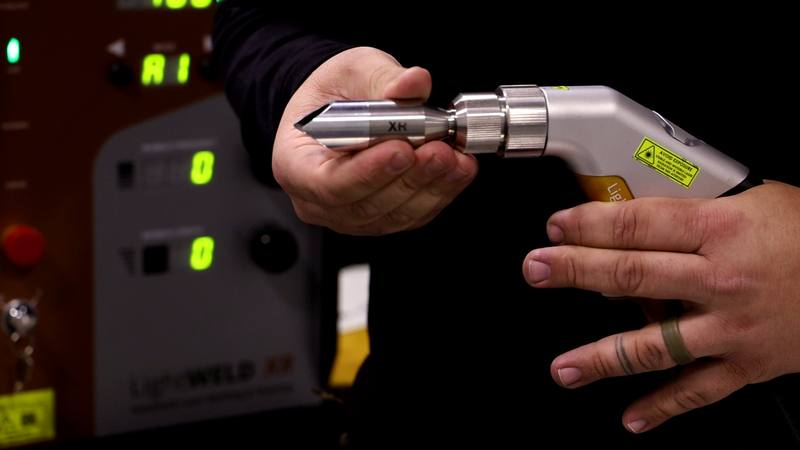
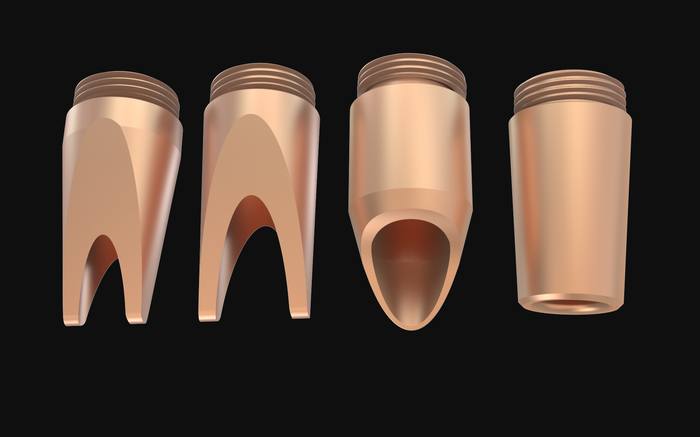
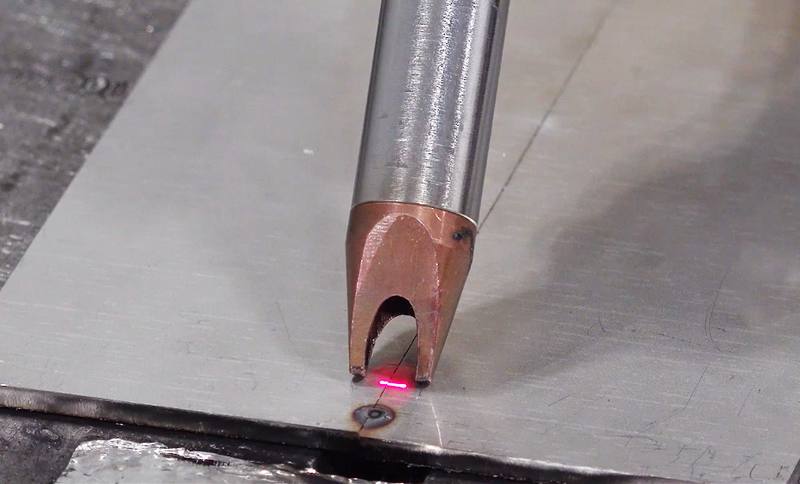
Switch between welding and cleaning nozzles in seconds — no tools required. XC and XR models include both welding and cleaning nozzle sets. Multiple welding nozzle profiles available: 1-point, 2-point (6mm and 9mm), and cone nozzles for different joint configurations.
Select your material and thickness — the system loads the optimised preset automatically. Advanced users can adjust power, wobble frequency, wobble length, and pulse parameters. Save custom presets for repeat jobs. The 2000 XR includes 100 preset modes.
Copper and aluminium nozzle tips for welding and cleaning. ILS stocks all LightWELD consumables in Australia — no international freight, no weeks of waiting. Cover slides, nozzle kits, wire, safety glasses all available for next-day dispatch from Hallam VIC.
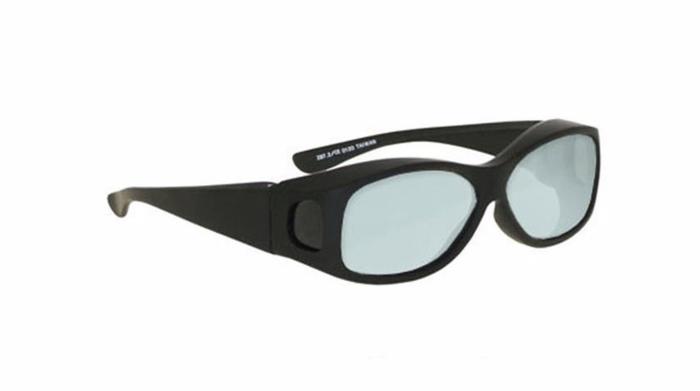
OD 6+ and OD 7+ rated laser safety glasses for 1,000–1,550nm — included with every new system. Multiple styles: standard, adjustable temple, and large fit-over for glasses wearers. Compliant with AS/NZS ISO 19818.1. Standard safety glasses are NOT adequate — correct eyewear is mandatory.
We stock the full range of LightWELD consumables and accessories in Australia. Fast turnaround from Hallam VIC — no international wait times.
Order Parts → (03) 9796 3055The questions we get asked before "which model do I need" — how the process actually works.
Laser welding joins metal using a highly focused beam of light instead of an electric arc. The concentrated energy melts a small, precise area of the base material, which fuses and solidifies into a weld as the beam moves along the joint. Because the beam is so tightly focused, the heat-affected zone is much smaller than conventional arc welding — which is why laser welds distort less and need less clean-up.
Easier than TIG or MIG for a new operator. Built-in presets automatically set power, wobble, and travel parameters for a given material and thickness, so beginners are producing usable welds within hours rather than the months of practice TIG typically demands. Experienced welders still get more out of the system as they learn to fine-tune settings, but the entry barrier is much lower.
Yes, when the equipment's built-in controls and correct PPE are used. Handheld laser welders are Class 4 laser products — capable of causing serious eye and skin injury if the beam controls are bypassed. LightWELD includes key-switch control, an emergency stop, a two-step trigger, and a part-contact interlock that only allows the beam to fire when the torch is in contact with the workpiece. Full details on our safety and standards page.
Laser welding is generally faster, produces less distortion, and requires less filler wire than either process — but MIG and TIG remain more practical for very heavy sections or awkward field access where a laser torch's line-of-sight requirement is a constraint. See our full laser vs MIG vs TIG comparison for a process-by-process breakdown.
Handheld laser welding still requires a controlled area — a laser-rated enclosure, curtain, or a space where the beam and reflections can't reach anyone unprotected. It's not a bring-anywhere tool the way a stick welder is, but it is genuinely portable within that constraint, and field repair is one of the applications ILS supplies systems for.
Laser welds achieve full penetration and weld strength comparable to, or exceeding, TIG welds on the same material and thickness, with the added benefit of a narrower heat-affected zone. Strength depends on correct parameters and joint fit-up, same as any welding process — which is what the built-in presets are designed to get right by default.
Wobble welding oscillates the laser beam rapidly from side to side as it travels along the joint — up to 5mm wide on LightWELD systems. It widens the weld bead, helps bridge gaps in imperfect joint fit-up, and produces a more forgiving process for less experienced operators than a single fixed-point beam.
Continuous wave delivers a constant beam for maximum travel speed on standard joints. Pulsed mode fires the beam in rapid bursts, which reduces average heat input — useful for thin materials or heat-sensitive assemblies where even laser welding's normally low distortion needs to be reduced further.
Yes. Laser welding still produces metal fume, and welding fume extraction is required the same as any thermal joining process. Laser cleaning (removing rust, mill scale, or coatings) also vaporises the removed material, so fume extraction applies there too — see our laser cleaning page for specifics.
Class IV laser controls, required PPE, AS3820, ASME BPVC Section IX QW-358, and Weld Australia TGN-SW02 — the full Australian & NZ compliance picture.
Read the Standards Guide →Every XC and XR system includes pre- and post-weld laser cleaning — no chemicals, no wire brushes, no separate machine.
See Laser Cleaning →Australia and New Zealand's specialist supplier of IPG LightWELD handheld laser welding and cleaning systems. Our team is ready to help you find the right solution and support you every step of the way.
Factory 8/17-23 Keppel Drive
Hallam VIC 3803, Australia
www.lightweld.com.au
www.industriallaser.com.au
We supply & support customers across New Zealand. Contact us for NZ pricing, freight, and compliance guidance.
Monday – Friday: 8:00am – 5:00pm
Saturday: 9:00am – 1:00pm
Sunday & Public Holidays: Closed
We respond to all enquiries within 1 business day. Australia & New Zealand welcome.