A customer asked me last month why their second LightWELD needed its own commissioning when the first one was already up and running on the floor.
Fair question. Here's the full answer — because it's really two questions wearing one trench coat: why does any unit need commissioning at all, and why does your operation need to check it again when the factory already has?
No Two Units Are Actually Identical
No two laser welders — even two units of the exact same model, off the same production line — put out identical real power at the identical setting. Component tolerances, fibre coupling, how hard the diode pumps are being run: it all shifts the number slightly, machine to machine. The screen still says 70% power. What's actually coming out the end of the torch can be a different story.
Most operators never find out, because most operators never have a reason to check. But if your welds need to stand up to a WPS — AS/NZS 1554, AS 4041, ASME BPVC Section IX QW-358 — that reason exists the day you qualify the procedure. A WPS is qualified against a specific machine's real output, not a brand name. Change the machine, and the assumption that it's putting out exactly what the last one did needs re-testing, not re-trusting.
What Happens at the Factory Before It Ever Reaches You
Most people shopping for a handheld laser welder compare power output, price, and warranty terms. Almost nobody asks the one question that actually determines whether the machine will weld to a repeatable standard: what happens to this unit between final assembly and the box it ships in?
A lot of laser welders on the market today follow the same path off the line: the unit is assembled, test-fired once to confirm it produces a weld, then packed and shipped. That single test-fire proves the machine can weld. It proves almost nothing about whether it welds consistently — this unit against the next one off the same line, or this unit in six months against this unit on day one.
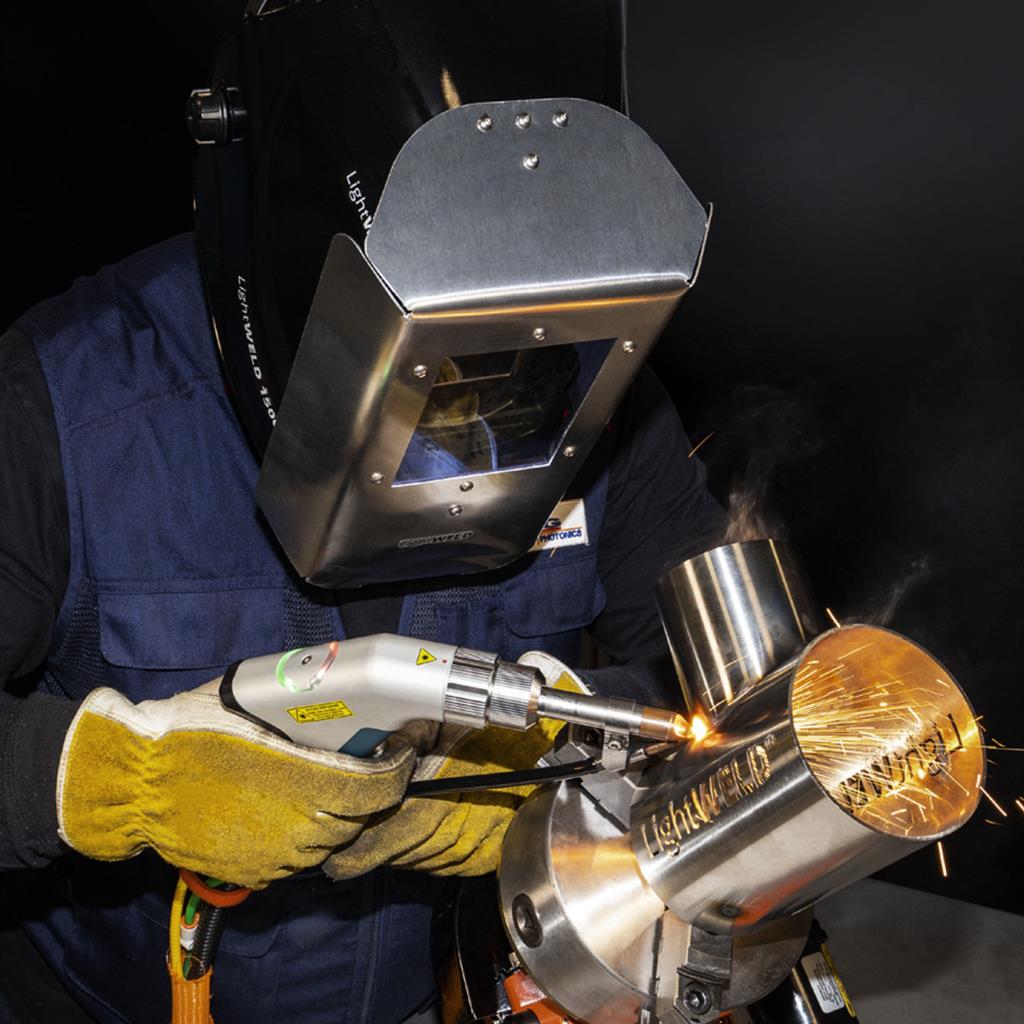
Every LightWELD system goes through a multi-hour burn-in and calibration process before it leaves the factory — the unit is run, monitored, and tuned so its power output and beam characteristics are dialled in against a known standard, not just confirmed to switch on and fire a laser. IPG backs this with ISO 9001:2015 certification and a stated practice of burning in key components for hundreds of hours before they're accepted into a finished system.
What Happens Again When We Commission It
That factory process is the foundation, but it isn't the last checkpoint. Every LightWELD we commission gets its own 5-hour burn-in and calibration check before it goes near a live job — long enough to catch an early-life fault before you find it mid-weld, and long enough to get a true, settled number to build a procedure on. That's why a second unit gets the same commissioning as the first, even though it's the "same" machine on paper: the factory process proves the unit was built right, our commissioning proves it's performing right, on your floor, on your power, before it touches a job that matters.
A WPS is qualified against a specific machine's real output, not a brand name.
Why Unit-to-Unit Consistency Is the Actual Product
If you're welding structural steel, pressure-rated vessels, or anything that needs to meet a documented standard — see our full laser welding safety and standards compliance guide — penetration depth isn't a nice-to-have, it's the thing you're being audited on. A machine that produces variable penetration depth from one unit to the next means you can't prove your process is repeatable, no matter how good your operator is. You end up over-engineering joints to compensate for a machine you can't fully trust, or worse, discovering the variance during a failed weld test.
This is the question that doesn't show up on a spec sheet comparison: not "what's the peak power," but "does every unit of this model perform the same as the last one, and can the manufacturer show you how they proved it?" If the answer is a single test-fire at the end of the line, you're buying a machine that works. If the answer is a documented burn-in and calibration process against a known standard — backed up by commissioning on your own floor — you're buying a process you can certify against.
The Question to Ask Before You Buy
Before you sign off on your next laser welder, ask the supplier directly: what quality process does every unit go through after assembly, and can you show me the data? Then ask what happens when it arrives at your door — does anyone check it against your power, your environment, your job, before it goes near real work? If they can't answer either question in specifics, you're not buying a calibrated tool. You're buying a machine that happened to weld once, in a factory, before it left.