Short answer: if you run a handheld laser welder, appoint one. Most states don't name the role in law, but the duty it covers is already yours, and Weld Australia's laser safety guidance lists it first.
Handheld laser welders are Class 4 lasers, LightWELD included. That's the highest hazard class there is. The beam can cause permanent eye damage from a direct hit, from a reflection off a shiny part, and from a diffuse reflection off a dull one. Under the wrong conditions it can also start a fire. That's why the question of who is responsible for laser safety in your workshop comes up the day the machine arrives.
What the Law Actually Requires
There is no standalone "laser safety officer" requirement in the WHS or OHS laws of most Australian states. There's also no general laser operator licence. What there is, everywhere, is the primary duty: as the business running the laser, you must identify the hazards and eliminate or minimise the risk so far as reasonably practicable. For a Class 4 laser, that duty is substantial, and someone has to own it.
Two states go further, with laser-specific radiation laws:
- Western Australia. Under the Radiation Safety Act 1975, the Radiological Council requires Class 3B and Class 4 lasers to be registered, and licences for their possession and use. Class 4 premises controls are prescriptive: enclosures and interlocks, controlled areas, signage and key control.
- Tasmania. The Radiation Protection Act 2005 treats industrial lasers as radiation apparatus. You need a licence to deal with the radiation source and registration of the premises where it's used or stored.
And one rule that catches people out: in the jurisdictions under the harmonised WHS laws, Class 3B and Class 4 lasers are restricted in construction work. If your plan is to take a handheld laser welder onto a building site, check that before you go.
The full state-by-state picture is in our laser welding safety, compliance and FAQ page and the downloadable regulatory brief there. This article is general information, not legal advice.
What the Standards Say
The role itself is defined in AS/NZS IEC 60825.14, the user guide in the Australian laser safety series. In plain terms, the laser safety officer is the person who knows how to evaluate and control laser hazards, and who is responsible for making sure that control actually happens.
Weld Australia's Technical Guidance Note TGN-SW02 (2024) applies that to our industry. For handheld laser welders, the first recommended precaution is appointing a trained laser safety officer. The note says the PCBU should assign the role, give the LSO the authority to enforce safe practice, and make sure they have laser-safety-specific training and the resources to do the job.
What an LSO Actually Does
This is where the role stops being a title on an org chart. Drawing on TGN-SW02 and AS/NZS IEC 60825.14, the LSO's job covers:
- A risk assessment before first use, and again after any modification to the laser or the setup.
- Defining the laser-controlled area. Where the beam can exceed safe exposure limits, including reflections, and how that area is marked, screened and restricted.
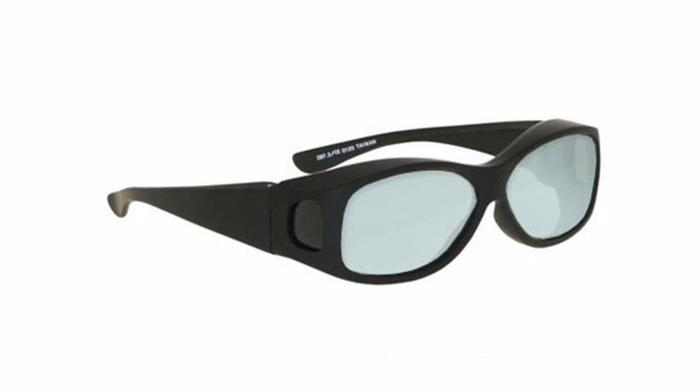
- Specifying PPE. Laser eyewear with the right optical density for the wavelength, plus skin protection and protective clothing. Fire-resistant materials matter with Class 4.
- Engineering controls. Key switches removed when the machine isn't in use, an E-stop within reach, interlocks on entry doors where practical, and warning signs at every entrance.
- Deciding who is allowed in. Only trained people, wearing the right eyewear, inside the controlled area.
- Keeping a laser inventory. Make, model, location, wavelength, power and hazard class for every laser on site, plus maintenance history.
- Making sure controls get checked. TGN-SW02 calls for verification of the safety measures by a competent person, not just installing them once.
Who Should It Be?
Usually someone already on your team: a workshop manager, a senior welder, your WHS lead. What matters is that they have the training, and the authority from management to stop a job that isn't safe. An LSO who can be overruled by a production deadline isn't doing the job.
The guidance also allows you to appoint an internal LSO who relies on technical input from an outside expert. For a small fabrication shop running one or two machines, that's often the practical model: your person owns it day to day, and gets help with the parts that need specialist knowledge, like the hazard distance calculations and eyewear selection.
Common Gaps in Workshops
- Eyewear on the operator, but not on the person walking past. Diffuse reflections reach further than people expect.
- Screens with gaps. A laser-safe curtain only works if it closes. Check the corners, the floor gap and anything above head height.
- The key left in the machine. Key control is one of the simplest controls there is, and the most often skipped.
- Welding eyewear used as laser eyewear. A standard welding shade isn't rated for laser radiation. Laser eyewear needs to meet AS/NZS ISO 19818.1 for the wavelength in use.
- No paperwork. If there's an incident, a written risk assessment and inventory is how you show you met the duty.
The Bottom Line
Outside WA and Tasmania, no regulator is going to ask to see your laser safety officer's name. But the duty is the same everywhere, and a Class 4 laser doesn't care which state you're in. Appointing and training an LSO is the clearest way to show you've managed the risk so far as reasonably practicable, and it's what the industry's own guidance recommends.
For disclosure: I'm an acknowledged contributor to Weld Australia's TGN-SW02 and sit on the Australian laser safety standards committee. If you're setting up a laser-controlled area or need your LSO trained, get in touch. We can organise LSO training, and a site visit if you need one.